Ask ten landlords whether they need fire doors and you’ll get ten different answers. That’s because the honest reply is: it depends on what you let out.
A single rented house, a shared HMO and a block of flats all sit under different rules. Here’s how to work out which one applies to you, and what to do about it. The rules below relate to England, where Weston-super-Mare sits.
Three categories cover most landlords: a house let to one household, a house in multiple occupation (HMO), and flats in a multi-occupied building.
The first is the lightest touch. The other two carry real, specific duties.
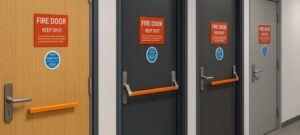
If you’re responsible for a building with two or more sets of homes, the Regulatory Reform (Fire Safety) Order 2005 covers the shared areas. That includes keeping fire doors on escape routes in good working order.
The Fire Safety (England) Regulations 2022 added detail. In buildings over 11 metres, the responsible person must check communal fire doors every quarter and flat entrance doors every year. Residents also need clear information about fire doors and why they must stay closed.
Let rooms to unrelated tenants who share facilities, and the rules get stricter. Councils attach conditions to HMO licences, and fire doors on escape routes, and on rooms opening onto them, are a common requirement.
Your council or a fire risk assessor can tell you exactly what applies to your house.
Do landlords have to install fire doors in an ordinary house let to one household? Not automatically. The Fire Safety Order doesn’t cover individual private homes.
But you still have a duty to keep the property safe, and building regulations can require fire doors after work such as a loft conversion or a garage conversion.
A door that looks solid but has painted-over seals or a broken closer isn’t doing its job, however heavy it feels.
Read More: Do Landlords Have to Install Fire Doors in the UK? – 2026 Guide
So, do landlords have to install fire doors? Where the rules apply, yes, and where they don’t, they’re often still the sensible choice. Either way, a few steps help.
This is general guidance, not legal advice. If you’re unsure, ask your local council or a qualified fire risk assessor.
Typing fire door installers near me into a search bar brings up plenty of names, but being close tells you nothing about competence. A few checks help.
Redline Fire Doors fits, inspects, and repairs fire doors for landlords and managing agents across Weston-super-Mare, so you can deal with one team whether you need a single replacement or fire door services across Weston-super-Mare for an entire block.
If the building has shared areas, the person responsible for the building (often the landlord or managing agent) is responsible for fire doors in those areas. Flat entrance doors also carry duties in larger buildings.
In buildings over 11 metres in England, communal fire doors need quarterly checks and flat entrance doors annual checks. For other properties, regular checks are still good practice.
They shouldn't. Removing or swapping a fire door for a standard one can breach regulations and may affect insurance, so tenants should report problems instead.
Enforcement authorities can issue notices and, in serious cases, prosecute. Non-compliant doors can also cause problems with insurance if there's a fire.
Usually, yes, on doors in shared areas and on escape routes. A door that doesn't close by itself can't hold back smoke or fire, so the closer matters as much as the door.