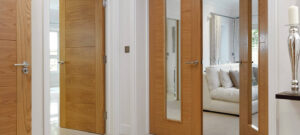
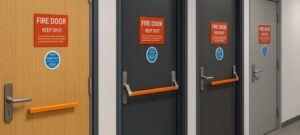
Most people never think about their internal doors until something goes wrong. Fire doors are one of those things — invisible when they’re working, and suddenly very important the one time they’re not.
So do I need fire doors in my house UK homeowners often wonder, especially after a renovation or a loft conversion. The honest answer is: it depends where in the house you’re talking about. Here’s how to work it out room by room.
In a standard, unaltered single-family home, fire doors throughout aren’t usually a blanket legal requirement. Building Regulations Part B gets far stricter once you’ve converted a loft, added an extension, or turned the house into a rental with multiple tenants.
The short version: the more complex your home’s layout, or the more people living under one roof, the more likely proper fire door installation becomes a genuine requirement rather than a nice-to-have.
An integral garage is one of the highest-risk spots in any home — fuel, tools, sometimes a car battery on charge overnight. If there’s a door straight into the house, it should be a proper fire door, not a standard interior one.
Kitchens are where most house fires actually start. A fire door on the kitchen, especially if it opens onto a hallway or the main escape route, buys everyone else in the house time to get out.
Any door leading onto your main escape route benefits from being a fire door, particularly in homes with more than one storey. It’s the difference between a smoke-filled stairwell and a clear path to the front door.
This is where fire door installation stops being optional for most homeowners. If your loft conversion adds a third storey with a stairwell running past bedrooms, building regulations typically require FD30 fire doors on the rooms leading off that stairway.
If you’re renting rooms out individually — students, professionals sharing a house — fire door regulations get considerably stricter. Every habitable room usually needs a certified fire door, full stop, not just the ones near a kitchen or garage.
Not every solid-looking door qualifies. A genuine fire door is a specific, tested product, not just a heavier slab of timber.
A lot of the housing stock around Weston-Super-Mare is older — terraces, converted properties, homes extended more than once over the years. That kind of history often means doors and door frames that were never built with fire safety in mind.
Redline Fire Doors handles fire door installation Weston-Super-Mare homeowners can rely on, from a single garage door replacement to a full specification for a loft conversion or HMO.
Not sure what your home actually needs? Get in touch with Redline Fire Doors at https://redlinefiredoors.co.uk for advice before you book anything.
Not always, for a standard family home. But specific areas — the garage door into the house, loft conversions, and any HMO — usually do need them, either by regulation or by common sense.
Generally, yes. Under Building Regulations Part B, a loft conversion that adds a stairwell running past other floors typically needs FD30-rated fire doors on the rooms leading off that stairway.
A fire door has a certified core, intumescent seals, smoke seals, and a self-closing device, all tested together as one system. A standard door is just timber or a hollow panel with none of that.
You can, if you're confident and competent, but the gaps and seals need to be fitted to tight tolerances. Professional fire door installation matters most here — a badly fitted fire door often performs no better than a standard one.
It varies depending on the number of doors, the fire rating needed, and whether frames need replacing too. Redline Fire Doors can give you an accurate quote after a quick look at what's involved.