
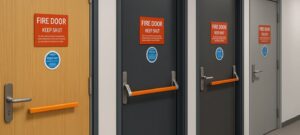
Fire safety continues to be a top priority for landlords across the United Kingdom. With evolving regulations and increasing scrutiny on rental properties, many landlords are asking a crucial question: do landlords have to install fire doors?
The short answer is: it depends on the type of property you own. However, in 2026, the rules are stricter than ever, particularly for Houses in Multiple Occupation (HMOs) and taller residential buildings. Installing the right fire doors is not just about legal compliance, it is about protecting lives, reducing risk, and safeguarding your investment as a landlord.
This comprehensive 2026 guide explains everything you need to know about fire door requirements, when they are mandatory, associated costs, and how to ensure full compliance without unnecessary stress.
Fire doors play a vital role in a passive fire protection system of a building. They are specifically engineered to withstand fire and smoke for a certain length of time, usually for either 30 minutes or 60 minutes, giving occupants time to escape safely.
As per the Regulatory Reform (Fire Safety) Order 2005 and the Fire Safety (England) Regulations 2022, landlords are regarded as the “responsible person” for their rental property. This legal requirement involves regular review of fire hazards, and the installation of necessary fire protection devices.
In some cases, buildings that are not required to be occupied for fire doors have clear requirements. Failure to abide by these rules may result in significant financial fines and/or enforcement notices or in the most severe cases, prosecution.
Do landlords have to install fire doors in every single property? The answer varies depending on the building type:
Fire doors are almost always mandatory in HMOs. Every door opening onto a shared escape route, including bedroom doors, kitchen doors, and lounge doors, usually needs to be a properly certified FD30 fire door, offering at least 30 minutes of fire resistance.
In residential buildings taller than 11 metres, strict rules apply. Landlords must ensure that flat entrance doors and communal area fire doors meet current standards. These doors must also be regularly inspected and properly maintained.
For simple single-family homes or low-rise flats, full fire doors may not be a strict legal requirement. However, many insurers now demand them as a condition of cover. Installing fire doors in these properties is still considered best practice, especially if the building has open-plan layouts, internal garages, or other higher fire risks.
A genuine fire door is a complete system, not just a heavy door. To be effective, it must include:
All components must be correctly fitted and tested together. Even small mistakes during installation can destroy the door’s fire rating.
Poor installation is one of the leading reasons fire doors fail during inspections or real emergencies. Incorrect gaps, missing seals, or faulty closers can render an expensive fire door completely ineffective.
This is why it is highly recommended to work with a specialist fire door company near you. Experienced installers understand current Building Regulations and British Standards. They ensure every door is fitted correctly, fully compliant, and supported with proper certification, giving landlords complete peace of mind.
One of the most common questions landlords ask is about fire door fitting cost. Prices vary depending on several factors:
On average, the supply and professional installation of a single compliant FD30 fire door typically ranges between £450 and £950. Larger projects or buildings requiring multiple doors naturally cost more, but economies of scale often apply. While this may seem like a significant investment, it is far more affordable than facing heavy fines, insurance complications, or the devastating consequences of a fire.
Redline Fire Doors is a respected specialist providing high-quality fire door supply, expert fitting, inspection, and maintenance services throughout the UK. They focus on helping landlords meet their legal obligations efficiently while maintaining high standards of workmanship and customer service.
With extensive experience working on HMOs and multi-occupied buildings, Redline Fire Doors offers certified products, professional installation, and clear guidance on ongoing compliance. Their team ensures doors not only meet regulations but also look good and operate reliably for many years.
Installing fire doors is only the first step. In 2026, landlords of buildings over 11 metres must carry out:
Detailed records of all inspections must be kept and made available upon request. Professional fire door companies can also provide convenient maintenance packages to keep your properties fully compliant year after year.
Beyond meeting legal requirements, fire doors offer several important advantages:
In an increasingly regulated rental market, proactive landlords who prioritise fire safety often find it easier to attract and retain good tenants.
The first step, if you’re not sure if your properties need fire doors, is to book a fire risk assessment by a professional. A competent assessor is able to check your buildings and give you concise and building-specific suggestions.It not only ensures compliance but also reflects a real care and attention toward the well-being of your tenants, which is a factor that is more crucial than ever in developing a strong reputation as a responsible landlord.
There may not be a strict legal requirement for no. standard single-let houses and low-rise properties. Others, however, do, such as HMOs and buildings over 11 metres tall. The only way to know your obligations is by conducting a professional fire risk assessment.
Fire doors in communal areas of taller buildings need to be checked every 3 months and flat entrance doors once a year. It is important to maintain good records. Convenience + compliance is the reason many landlords opt for professional maintenance contracts.
Look for a professional who has previously worked with and who has good ratings from customers. The expert guidance, high-quality installation, and reliable support from firms such as Redline Fire Doors ensure that companies remain fully compliant with regulations, reducing risks and providing peace of mind.