Ensuring robust passive fire protection is a fundamental responsibility for property owners, landlords, and facility managers across Somerset. Securing professional fire door services remains the most reliable way to protect building occupants and satisfy strict legal obligations. Many stakeholders frequently ask: can a fire door be repaired, or does a minor fault necessitate a complete system replacement? By implementing routine, professional fire door inspection routines and executing timely fire door repair works, you can save significant capital while maintaining an airtight compliance strategy.
Partnering with an industry-vetted specialist like Redline Fire Doors provides the technical expertise needed to assess your infrastructure, preserve life safety, and ensure full alignment with modern UK building regulations.
The Critical Role of Fire Doors in Passive Fire Protection
Fire doors are not standard interior doors; they are meticulously engineered safety devices designed to perform under extreme thermal stress.
- Flame and Smoke Compartmentalization: The primary function of a fire door is to isolate smoke, toxic gases, and flames within a specific zone. This critical containment grants occupants extra time to evacuate safely along designated escape routes.
- Structural Integrity Protection: By restricting a fire to its point of origin, compliant doors limit localized property destruction, safeguard the building’s structural framework, and lower subsequent insurance restoration costs.
The Core Elements of Professional Fire Door Services
Maintaining compliance requires a continuous strategy of routine evaluation, targeted hardware adjustments, and precise installations.
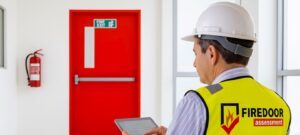
Comprehensive Fire Door Inspection
Regular diagnostic assessments are necessary to uncover hidden structural flaws before an emergency occurs. According to historical national safety audits compiled by the Fire Door Inspection Scheme (FDIS), over 75% of inspected fire doors in the UK fail to meet required safety benchmarks due to improper installation or wear. A certified assessment covers multiple critical safety checkpoints:
- Leaf-to-Frame Clearances: The gaps around the top and sides of the door must remain consistently between 2mm and 4mm to allow proper closure while ensuring intumescent seals function optimally.
- Intumescent and Smoke Seals: Technicians check that the heat-sensitive strips recessed into the door edge or frame are continuous, unpainted, and free of physical damage.
- Hinges and Essential Hardware: Every door leaf requires at least three fire-rated, CE-marked hinges to prevent dropping and ensure structural alignment under intense heat.
Professional Fire Door Repair
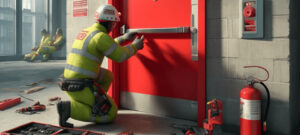
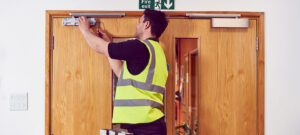
If an inspection reveals deficiencies, many building managers wonder: can a fire door be repaired? The answer is yes, provided the foundational timber or steel core remains completely intact. Certified repair technicians can seamlessly rectify minor non-compliance issues without requiring a full replacement. Standard corrective actions include replacing worn intumescent strips, adjusting commercial overhead door closers to ensure positive latching, and swapping out non-compliant locks or handles with certified, fire-rated alternatives.
Certified Fire Door Installation
When a door assembly exhibits severe core warping, delamination, or structural damage, a complete replacement becomes mandatory. Certified teams supply and fit bespoke, fully compliant timber and industrial door assemblies tailored precisely to your architectural requirements, ensuring every element meets rigid UK safety codes.
Navigating Legal Compliance and Responsibilities
Failing to maintain compliant passive fire barriers carries severe financial penalties and legal liabilities for business operators.
The Regulatory Reform (Fire Safety) Order 2005
Under UK law, the “Responsible Person” for a commercial premises, block of flats, or public educational building is legally required to maintain all fire safety assets in efficient working order. Research released by the Association for Specialist Fire Protection (ASFP) emphasizes that faulty fire doors remain one of the most common structural vulnerabilities cited during local fire authority enforcement actions.
Recommended Assessment Intervals
Safety experts recommend a minimum of two fire risk remediation reviews or maintenance checks per calendar year for low-occupancy buildings. For high-traffic sectors, such as busy retail hubs, corporate offices, or educational academies, inspections should occur quarterly or monthly to account for increased physical wear and tear.
Why Professional Management Beats DIY Maintenance
Attempting to service or alter life-safety doors without accredited training creates major liability and safety risks.
- Specialized Hardware Requirements: Standard domestic hinges, domestic handles, and non-rated wood fillers fail instantly during a major fire event. Fire door components must be fully system-tested and fire-rated.
- The Precision Gap Margin: A fraction of a millimeter can decide whether a door closes securely or jams against the frame when exposed to high heat. Professional installers use highly precise calibration tools to guarantee reliable operation.
- Detailed Audit Trails: Professional contractors provide comprehensive service reports within 24 hours of execution. This clear documentation serves as legal proof of your building’s safety compliance for local council inspectors, fire officers, and commercial insurers.
Operating out of Weston-super-Mare and supporting commercial clients throughout Bristol and Somerset, Redline Fire Doors delivers complete, fully certified passive fire protection solutions. From precision structural inspections to complex institutional maintenance, their fully accredited technicians ensure your assets protect building occupants while ensuring your business stays fully compliant with all current UK safety legislation.
Conclusion
Fire doors represent a crucial line of defense in protecting lives and securing your property investment. Consistently managing these assets through professional inspections, timely repairs, and certified upgrades allows you to eliminate structural safety hazards, optimize daily traffic flow, and fulfill your legal obligations with total confidence.