The structural integrity of a fire door dictates the safety and regulatory compliance of any modern property. Fire doors serve as critical passive fire protection assets designed to save lives and limit property damage. When a fire door becomes compromised by a puncture, hole, or deep crack, its ability to function as a barrier against smoke and extreme heat drops instantly.
Understanding the legalities and mechanical realities of building safety is essential before attempting any physical fixes. Fire doors are heavily regulated life-safety devices, not standard internal doors. This comprehensive guide outlines the strict rules regarding structural defects, explains why proper maintenance matters, and answers the vital question of how to repair a hole in a fire door under UK compliance frameworks. If you are searching for reliable fire door repairs near you, knowing the correct repair standards can help ensure safety, compliance, and long-term protection.
The Critical Importance of Certified Fire Doors
Fire doors do not simply stop flames; they compartmentalize a building to provide valuable time for evacuation. According to comprehensive national fire safety data published by the British Woodworking Federation (BWF), over three million certified fire doors are installed in the UK annually across residential, commercial, and public sectors. However, active inspection data reveals a troubling trend in property maintenance.
Statistical audits from the Fire Door Inspection Scheme (FDIS) indicate that roughly 75% of inspected fire doors across the UK fail to meet basic safety standards due to poor installation, structural damage, or neglected maintenance. A hole as small as a few millimeters allows toxic smoke to bypass the door entirely.
Smoke inhalation is the primary cause of fatalities in domestic fires, making a compromised door a severe liability. Keeping these doors fully intact protects occupants and keeps your property aligned with national building laws.
Understanding Fire Door Construction
Fire doors are built using heavy solid-timber cores or specialized mineral composites wrapped in fire-resistant veneers. They are designed to withstand extreme temperatures for specific periods, typically 30 minutes (FD30) or 60 minutes (FD60).
When a hole is drilled or punctured into the face of the door, the dense protective core is exposed, and its structural strength is lost. If a fire occurs, the flames will burn through that specific weak spot in minutes, completely bypassing the door’s rated protection time.
When is a Local Repair Permitted?
Minor surface damage can occasionally be repaired without removing the entire door leaf. Small cosmetic flaws, superficial scuffs, or tiny screw holes left behind by old signage can be fixed under strict conditions:
- The damage must not pass completely through the door veneer into the main internal core.
- All repair materials used must be explicitly certified by the original door manufacturer.
- The physical repair must be executed using verified intumescent paste or specialized fire-rated wood filler.
When is a Total Replacement Mandatory?
If the structural damage is severe, attempting a local fix is highly dangerous and legally non-compliant. A complete replacement of the door leaf is mandatory if you encounter any of the following issues:
- A puncture or hole passes entirely through the door from one side to the other.
- The face veneer is split, warped, or detached from the inner solid core.
- The hole is located near critical hardware components like hinges, locks, or latch mechanisms.
- The door has suffered structural cracks from a forced entry or a heavy impact.
Step-by-Step Guide: Managing Surface Faults and Structural Holes
If the surface damage is minor and complies with local fire safety rules, the repair must be handled with extreme care. Here is the technical workflow for managing surface faults correctly.
Step 1: Professional Technical Assessment
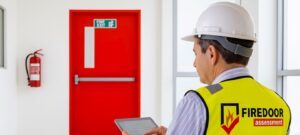
Before picking up any tools, the door must be carefully inspected to identify its rating, manufacturer, and core style. You can find this information on the certification label or trace pin located on the top edge of the door leaf. If the inspection shows that the hole is deep or structurally significant, skip the DIY approach entirely.
Step 2: Preparing the Damaged Area
If the assessment confirms the damage is superficial, the area must be meticulously prepped. The engineer will sand down the edges of the split veneer to remove loose splinters, carbon debris, or old paint. The cavity is then thoroughly cleared of dust and moisture to ensure the specialized filling compounds bond perfectly to the wood grain.
Step 3: Applying Certified Intumescent Fillers
Standard polyester wood fillers or decorative wall putties must never be used on a fire door. Instead, technicians use certified, fire-rated intumescent fillers. These specialized compounds are engineered to expand rapidly when exposed to high heat, sealing off the cavity and stopping smoke from passing through.
Step 4: Finishing and Sanding
Once the intumescent filler has fully cured and hardened, the surface is gently sanded using fine-grit sandpaper until it sits perfectly flush with the surrounding wood veneer. The door can then be refinished using certified fire-retardant paint or lacquer, restoring its clean appearance without altering its underlying safety performance.
Proactive Property Protection: Structured Care Frameworks
Maintaining high-quality passive fire protection requires consistent oversight. Routine maintenance extends the functional lifespan of your building assets and keeps your occupants safe year-round.
The True Value of Professional Maintenance
A structured service program protects your building by covering several critical areas:
- Smoke Seal Integrity: Checking that intumescent strips and brush seals are fitted perfectly around the frame to stop toxic gas from escaping.
- Structural Clearance Audits: Verifying that the gaps between the door leaf and the frame stay between 2mm and 4mm for smooth closure.
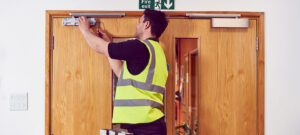
- Hardware Performance Tuning: Adjusting automatic self-closing devices to ensure the door latches securely from any angle.
- Structural Compliance Documentation: Providing digital inspection sheets that serve as proof of safety compliance for insurance providers and local authorities.
Sourcing Accredited Engineering Teams
Handling property safety demands verified training, strict attention to detail, and a deep understanding of UK building regulations. To protect your investment and maintain valid insurance coverage, always choose accredited professionals.
Verifying Professional Credentials
When hiring field teams to inspect or maintain fire-rated installations, verifying their professional credentials is a vital safety step. Working with experienced providers like Roebuck Property Solutions Limited ensures your building assets are handled by skilled multi-trade professionals who prioritize safety and compliance.
Clear, Transparent Support Packages
Top-tier service companies offer upfront pricing and tailored service plans to fit different property types and organizational budgets:
- Standard Commercial Care: Tailored for small offices and retail shops, focusing on basic compliance checks and minor hardware adjustments.
- Public Sector and Educational Programs: Built for schools, care homes, and high-traffic public spaces that require durable hardware and strict safety documentation.
- Industrial and Asset Care: Designed for large warehouses and manufacturing sites using heavy-duty fire doors and automated roller shutters.
Summary of Fire Door Maintenance
Maintaining the structural strength of your fire doors is a vital responsibility for any property owner. While small surface blemishes can occasionally be repaired using specialized intumescent materials, deep holes and punctures require a full door replacement to stay legally compliant and safe. Redline Fire Doors provides professional solutions to help property owners maintain certified fire door safety, compliance, and long-term protection.
Partnering with accredited engineering teams ensures your safety installations remain durable and fully operational. Do not leave your building’s safety to chance, address structural door damage immediately to create a safer, more secure environment for everyone.