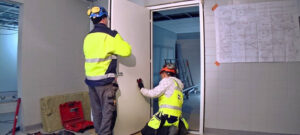

Fire doors are a critical part of any building’s fire‑safety system, acting as a barrier that helps contain flames and smoke and protects escape routes. In the UK, the cost of installing these doors can vary widely depending on building type, door specification, and location, making it important for property owners and managers to understand what they should realistically expect to pay in 2026. This guide will walk you through typical fire door installation UK cost ranges, the factors that push prices up or down, and how to make sure your project is both compliant and good value.
When quoting in 2026, many UK contractors and suppliers put the average cost for a fully installed fire door assembly (door leaf, frame, and necessary hardware) in the region of £450 to £1,200 per door for standard residential and commercial jobs. This range can stretch higher for more complex or specialist installations, such as steel doors, heavily glazed assemblies, or work in high‑rise or listed buildings.
For a simpler scenario, such as replacing a standard FD30 fire door into an existing frame with minimal structural changes, labour‑only fitting might sit around £30–£50 per door, with the door itself typically adding another £65–£250 depending on finish and glazing.
Most realistic fire door installation quotes can be broken down into three main components: product cost, labour, and additional work.
Several elements can significantly shift the fire door installation UK cost in either direction. Understanding these will help you budget more accurately and judge whether a quote is reasonable.
A basic FD30 (30‑minute) internal timber door will usually be cheaper than an FD60 (60‑minute) timber door or an FD60 steel door. Steel fire doors, often used in commercial corridors, stairwells, or plant rooms, include more robust materials and heavier hardware, which naturally increases both product and labour costs.
The cost of ironmongery can vary widely. A simple privacy‑lock fire‑door set might be relatively inexpensive, while fully coordinated fire‑rated hardware can add hundreds of pounds to the total. Features such as automatic‑release closer‑arms or integration with a building’s access‑control system can also increase labour and complexity charges.
High‑rise residential blocks, care homes, schools, and hospitals often come with tighter access windows, more complex logistics, and higher safety demands, all of which can push up the price. In contrast, domestic houses or small commercial units may be quicker and cheaper to fit because the work is less constrained and can often be completed in a single visit.
Installing multiple fire doors in one project usually works out cheaper per door than a single‑door job, because the contractor can spread travel, setup, and mobilisation costs across several units. For example, a block of 20 communal‑area doors might be quoted at a lower per‑door rate than the same door installed in isolation.
Labour costs in London and the South East tend to be higher than in other parts of the UK, which is reflected in fire door installation quotes. Regional differences, fuel surcharges, and travel time can all influence the final figure, so it is worth asking whether your quote is based on a local or national rate card.
It is tempting to chase the cheapest quote, but cutting corners on fire door installation can have serious consequences. A poorly fitted door, even if it starts life as a fully rated assembly, can fail under fire conditions if the frame is not correctly fixed, gaps are too large, seals are missing, or hardware is non‑compliant.
In the UK, the Regulatory Reform (Fire Safety) Order 2005 places the duty on the “Responsible Person” to ensure that fire‑safety measures are carried out by a competent person, which for fire doors means someone with the right training and understanding of relevant standards such as BS 8214 and manufacturer installation instructions.
It is common for clients to ask, “Do you need a certificate to install fire doors?” in the UK. The short answer is that there is no single national licence that every fire door installer must hold by law, but there are strong expectations that the work is done by a competent person and supported by appropriate documentation.
For most commercial, multi‑occupancy, and higher‑risk buildings, clients and insurers expect installers to be trained under recognised schemes such as:
To manage fire door installation UK cost effectively while staying compliant, property owners and managers should consider the following steps:
In 2026, the typical cost of fitting a fire door in the UK can range from around £400–£1,200 per door for a standard supply-and-fit job, depending on specification, hardware, building type, and location. While it can be tempting to choose the lowest quote available, it is far safer and often more cost-effective in the long run to use a properly trained and, where appropriate, accredited installer such as Redline Fire Doors who can provide a clear fire door installation certificate. When you know what to expect and how to evaluate a quote, it becomes much easier to strike the right balance between budget, safety, and compliance.
Most standard fire door installation projects in the UK fall in the range of £450–£1,200 per door, including the door, frame, and basic fitting. Prices can be lower for simple leaf‑only replacements or higher for complex steel doors, heavy glazing, or difficult access situations.
There is no single national licence, but installers are expected to be “competent,” and many hold recognised fire‑door‑installation qualifications or accreditations. A fire door installation certificate confirms that the work was done correctly, to the manufacturer’s instructions and relevant standards, and serves as evidence of compliance for insurers and regulators.
While it is technically possible for a skilled joiner to fit a fire door, doing so without proper training and understanding of current regulations can compromise the door’s fire performance and leave you non‑compliant.